I’ve been testing early Wi-Fi 7 routers and let me tell you – the leap from Wi-Fi 6 is almost as dramatic as moving from 4G to 5G. But what’s really exciting isn’t just the raw speed; it’s how with Wi-Fi 7, your phone, tablet, and even your next wearable will stay connected in ways we’ve only dreamed of. This new standard isn’t just about faster downloads – it’s about rethinking how we interact with the wireless world around us.
The real magic starts with MLO – Multi-Link Operation
Instead of forcing your device to stick to one band (say, 5 GHz), MLO allows it to send and receive data across 2.4 GHz, 5 GHz, and the brand-new 6 GHz band simultaneously. Imagine a highway where your car can use three lanes at once – that’s what Wi-Fi 7 does with network traffic. This slashes latency to under 1 millisecond in ideal conditions and makes video calls buttery smooth even when the whole family is streaming.
The implications for mobile are huge. When you’re walking from your living room to your backyard, your phone won’t need to handshake between access points – MLO keeps layers alive so there’s no lag when switching. This is exactly the type of seamless experience that makes foldable phones feel more like portable desktops. And as I covered in our Future of Mobile: Foldables, Wearables & 6G Guide, connectivity is the unsung hero that makes all these devices work together.
What does Wi‑Fi 7 mean for your phone’s battery?
One of the biggest complaints with early 5G phones was battery drain. Wi‑Fi 7 addresses this with something called Triggered Multi-User Access. Instead of having the phone constantly listen for signals, the router schedules transmissions only when data is ready to send. This saves a ton of power – especially for wearables that rely on tiny batteries.
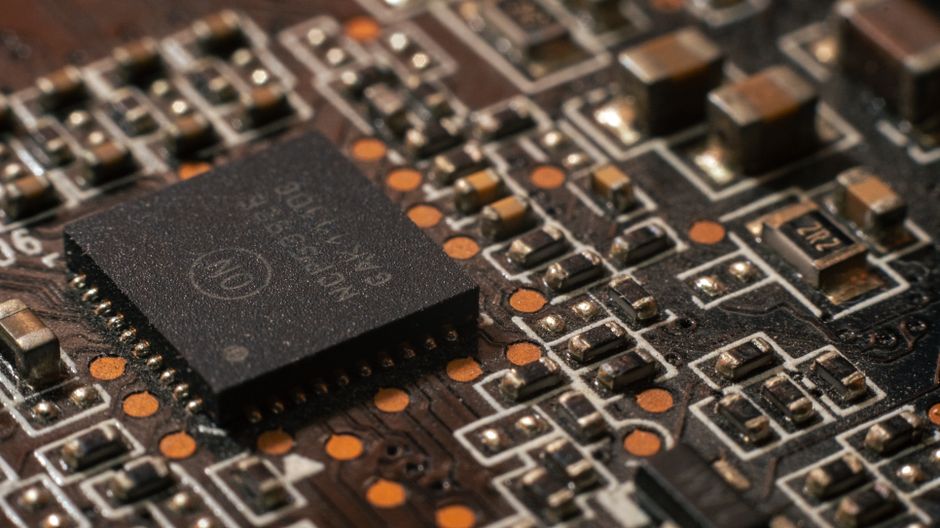
We’re already seeing the first Wi‑Fi 7 smartphone chipsets from Qualcomm and MediaTek, and they promise to work hand-in-hand with 5G Advanced and eventually 6G. If you want to dig deeper into how these chips are evolving, check out our analysis of Qualcomm’s latest modem.
Comparing Wi‑Fi generations: what changes with each step
| Feature | Wi‑Fi 5 (802.11ac) | Wi‑Fi 6 (802.11ax) | Wi‑Fi 7 (802.11be) |
|---|---|---|---|
| Max Speed | 3.5 Gbps | 9.6 Gbps | 46 Gbps |
| Bands used | 5 GHz only | 2.4 + 5 GHz | 2.4 + 5 + 6 GHz |
| Channel width | 80 MHz | 160 MHz | 320 MHz |
| Latency | ~10 ms | ~2-5 ms | <1 ms |
| Key technology | MU-MIMO (downlink) | OFDMA + uplink MU-MIMO | CMU-MIMO + Multi-Link Operation |
Why mobile tech enthusiasts should care now
Even though Wi‑Fi 7 routers and devices are just hitting the market, early adopters will see immediate benefits with cloud gaming and VR streaming. The ultra-low latency makes game controllers feel instantaneous, and 320 MHz channels mean you can download a 4K movie in under 20 seconds. But the real value comes from integration with your mobile ecosystem. Your foldable phone, your smartwatch, and your AR glasses can all share a single 6 GHz connection without interfering.
Speaking of AR glasses, we recently looked at how the Xreal Air 2 Ultra leverages Wi‑Fi 7 for wireless display. And if you’re curious about how the new standard plays with 5G mmWave, our colleague breaks it down in this deep dive on coexistence.
The bigger picture: Wi‑Fi 7 and the path to 6G
The Future of Mobile: Foldables, Wearables & 6G Guide emphasizes that no single technology works in isolation. Wi‑Fi 7 is designed to complement 5G Advanced, and its multi-link features will become even more critical with 6G, where we’ll see terahertz frequencies and massive MIMO arrays. Early patents show that 6G will borrow heavily from Wi‑Fi 7’s scheduling algorithms.
So what can you do today? Start checking your router’s compatibility. Most Wi‑Fi 7 routers are backward compatible with older devices, so you won’t break your existing smart home gadgets. But when you buy your next phone in 2025 or 2026, make sure it supports Wi‑Fi 7 – that phone will stay relevant well into the 6G era.
For a full overview of all the emerging mobile technologies, don’t miss our dedicated pillar page: Future of Mobile: Foldables, Wearables & 6G Guide. And if you’re a spec junkie, our roundup of the best Wi‑Fi 7 routers for mobile users will help you decide what to buy.
Bottom line: Wi‑Fi 7 is not just an incremental upgrade. It’s a fundamental shift in how we connect with our mobile devices – and it’s the cornerstone of everything we expect from foldables, wearables, and beyond. Stay tuned, because this ride is just getting started.


Leave a Reply